Thursday, April 25, 2024

Journal #7: Finn - Reflection

 I think our discussion in class about this reading was very helpful to understanding and connecting it to my life. Looking back at my schooling and trying to make sense of it has been different as I progress through this program. I grew up in a middle class public school district and then switched to an upper class public school for high school. The influences and teachers that I have had definitely impacted my decision to be a teacher. In Finn's A Distinctly Un-American Idea, it says, "In the middle class school, about one-third of the teachers grew up in the neighborhood of the school. Most graduated from the local state teachers college, and many of them lived in the neighborhood of the school" (Finn, 12). I remember a lot of my teachers in middle school teaching at that same school that they had grown up in. Some of them even had some of their colleagues as teachers!

The buildings of my middle class schools were dreary and focused mostly on drilling information into our heads rather than being creative. After I transitioned to a higher class district, I saw many changes in my education. Again, a lot of my teachers actually went to Ponaganset themselves, but their learning styles were a lot different. We did more projects focused around creativity such as a blackout poetry project in US History or creating informational posters and pamphlets for health class. Because of this change, it changed my view on how children should be learning. Rather than preferring lecture based learning, I started to see education from a different approach and wanting to embrace creativity. 

One point I can bring to class is to talk about how we can change this system of believing you have to stay in the same class you were born into. A way we can break this habitual system is to offer more opportunities for all students to grow and learn so they can make any decisions they want to (going to college, trade school, etc.) and not being forced into anything because they don't have access. Below is an article giving examples from people about their personal experiences with class.

Has your class changed over the course of your lifetime?


Monday, April 22, 2024

Video Analysis Links - Teach Us All, Classroom Tour and Precious Knowledge

Maija Spence - Teach Us All

Maija Spence - Classroom Tour

Maija Spence - Precious Knowledge

I couldn't figure out how to upload them as images as well but the links should work!

Journal #6: Structural Racism - Extended Comments

 I am making extended comments on Sarah Kennedy's blog about Tricia Rose's How Structural Racism Works. Sarah's arguments all have wonderful points. Reading Sarah's blog truly reiterated, in a summarized form, Rose's points and the understanding of them. 

It has been a recurring idea in this class and the readings we've been provided that education, knowledge and awareness are necessary to make change in the world we know. Obviously, awareness is a necessity to making a change in social justice. Sarah makes a great point that educating our society, whether it directly affects you or doesn't affect you at all, is important to make a step forward and try to break the cycle. Doing research and combining all of the research that has been done is an excellent way to educate yourself and others, and to begin making that change that we all want to see. 

A really great idea that I read in Sarah's blog and watched in Rose's video was that a lot of people have the mindset that if it doesn't affect them, then they don't need to worry about it. That's definitely not the case at all! Sarah brought up a really great point that the Black Lives Matter movement brought a lot of attention and awareness to those matters. Personally, I didn't engage much in educating myself with social justice matters really until the BLM movement was so prominent. I knew there were issues but as a young teenager, I wasn't really aware of any of it. Since then, I've tried my best to stay educated and at least try to make people aware of social justice issues by reposting articles, talking about it with my peers and posting things on my Instagram stories. Even if you can't do a ton, making people aware can have almost a butterfly effect to make change. 

Overall, I think Sarah's blog was absolutely spectacular at summarizing and speaking to Tricia Rose's points in her argument. Great job Sarah, thank you for sharing!


Thursday, April 11, 2024

Journal #5: Intersectionality - Connections

Watching the "What is Intersectionality?" video was a very helpful break down on what exactly we are talking about. I loved the use of colors and the examples given to really break down intersectionality for everyone to understand it. As a white person, I've never been forced to think about my identity like Greta from the video, but people like Jerry and Fatimah are forced everyday to think about their identities just because it's marginalized. It's been really helpful to fill out the identity wheels with the layers of privilege and to look at S.C.W.A.A.M.P. and relate it back to this. Sometimes you don't realize just how much privilege you have until it is laid out in front of you. Luckily, with the world we live in today, I think people are starting to realize privilege and are at least trying to make a change. Advocacy is a lot bigger in this day and age.

Intersectionality definitely reminds me of S.C.W.A.A.M.P. because of the layering identities that people have. S.C.W.A.A.M.P., identifying the main points of privilege, directly connects to intersectionality because the topic of privilege is prominent in the discussion. As we know, intersectionality is the overlapping layers of identity that everyone has. Some people have marginalized identities such as being Black or not able-bodied and despite it not having privilege, it continues to be part of their overlapping identities. In the TED talk by Kimberlé Crenshaw, she says, "There was no name for this problem and we all know when there's no name for that problem, we can't see a problem. And when you can't see a problem you pretty much can't solve it." I can relate this quote directly to a quote I used in my blog from Johnson which goes as follows, "We can't talk about it if we can't use the words" (11, Johnson). Both of these quotes discuss how we need to make light on the problems in our society by bringing them up in discussion despite it being uncomfortable. To be able to solve the problems of injustice, we need to use the proper language and identify exactly what is going wrong.

This article about intersectionality also gives a background on our TED talk speaker KimberlĂ© Crenshaw, who originally coined the term.

Wednesday, April 10, 2024

Journal #4: Kohn Reading - Reflection

The Kohn reading had many different aspects in it, talking about the different aspects of a classroom. The chart we filled out discussing how points in the Kohn reading resonated with our personal experience growing up in school and witnessing things during out school placements really helped me to gather my thoughts about this. 

One thing that really stuck out to me was the location of the teacher. Growing up, my teachers were usually always in the front of the room or floating around the room while students did work. My placement teacher is a lot different however. She doesn't use her teacher's desk at all except to put materials on it. When students are working, she's either sitting with them at their tables in groups helping or doing her own prep or walking around making sure students are on task. The classroom I'm in is first grade but they've already been granted so much independence.

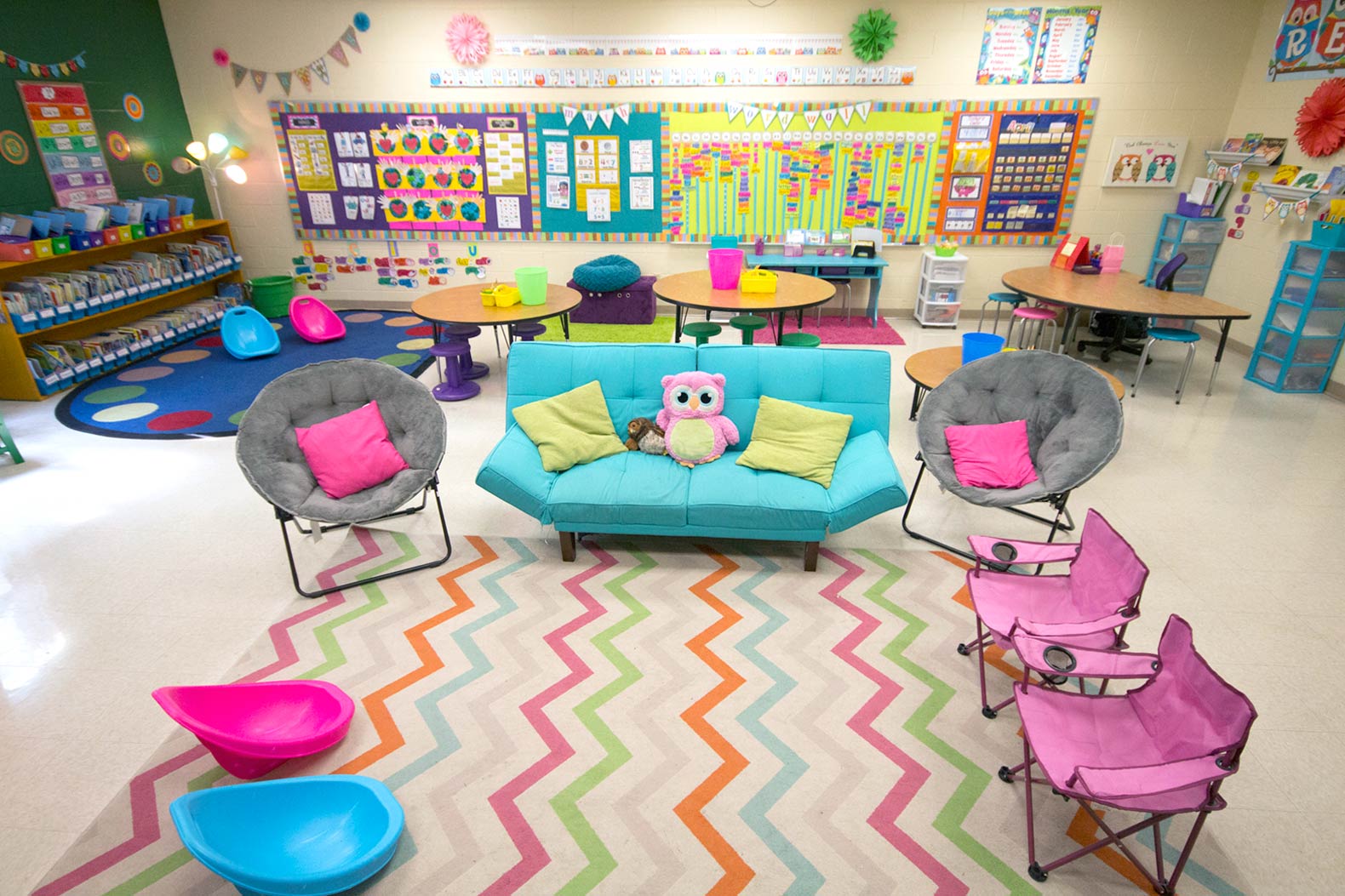
Another thing that I think is important to talk about is the furniture in the classroom. My personal experience was mostly just desks and chairs either in rows facing forward, or a horseshoe, or in groups, but it was always desks and chairs. My placement at Alfred Lima has seating for the students where they can sit at a low table with comfy chairs to do their work, or on the rug with lap desks, or at the regular tables and they're allowed to float around the room to change their spot. The students seem very comfortable and it adapts to different and preferred ways of learning.

The last thing I'll talk about is the teacher's voice. From my childhood, I remember for the most part teachers would raise their voice if they needed attention from students or they would clap out patterns to get attention. For the most part, my classes were behaved and paid attention but those occasional times, teachers would yell. I don't think I've heard my placement teacher raise her voice in a negative context. The only exception would be at recess when she had to make sure students could hear her and it was "line up!" To get attention in the classroom, she'll say "class, class?" and they echo back with "yes, yes?" She does it in different voices sometimes and they echo back with those different voices so it makes them excited to listen. I really want to adapt some of her strategies as a teacher because she's truly so amazing and respects the students so much.

Culturally Relevant Pedagogy

Above is a short article discussing the basics of culturally relevant pedagogy and it really helped me to understand the topic a bit more.

Journal #3: Kozol Reading - Quotes

The Importance of Hope | PainScale


 "The pastor tells me that the place is known as 'Children's Park.' Volunteers arrive here twice a week to give out condoms and clean needles to addicted men and women, some of whom bring their children with them. The children play near the bears or on a jungle gym while their mothers wait for needles." (Kozol, 12)

It's very sad that there are places in the world that are like this, but it's incredible how many programs there are to support people who need help, whether it's helping them quit or providing them with supplies to stay safe. This book was written in 1995 and there have been many more programs created to help people like this which is amazing!

"He seems to take his lessons of religion literally also. Speaking of a time his mother sent him to the store 'to get a pizza'---'three slices, one for my mom, one for my dad, and one for me'---he says he saw a homeless man who told him he was hungry. 'But he was too cold to move his mouth! He couldn't talk!' 'How did you know that he was hungry if he couldn't talk?'  'He pointed to my pizza.' 'What did you do?' 'I gave him some!' 'Were your parents mad at you?' He looks surprised by this. 'Why would they be mad?' he asks. 'God told us, 'Share!''" (Kozol, 8)

I can connect this to my life but in a different way because as a kid, I always wanted to help the homeless and provide food for them. I think it's an important lesson for children to learn that they should want to help others who are less fortunate than we.

"There are children in the poorest, most abandoned places who, despite the miseries and poisons that the world has pumped into their lives, seem, when you first meet them, to be cheerful anyway." (Kozol, 6)

Unfortunately, there are so many children living and growing up in terrible environments but it is so nice to hear when kids can still see the goodness in the world despite their circumstances. This whole reading was sad but hopeful. As sorrowful as this situation and story is, the positive attitude we can see from some of the people is encouraging.

A point I can bring up in class is how much hope I can see radiating from the younger people in this excerpt and how important the resources are that are mentioned. It's so amazing how many more resources there are in the world nowadays.

How to Break the Cycle of Poverty

Linked above is an article about how children can break the cycle of poverty. The most important thing to help break this cycle is to make sure they get a good education to get a good job after school.

Monday, February 5, 2024

Journal #2: Delpit Reading & An Indian Father's Plea Readings: An Argument!

"Issues of power are enacted in classrooms" (24, Delpit). The first rule of "the culture of power" really stuck out to me, especially because it immediately reminded me of Wind-Wolf's situation. On page 24 of the Delpit reading, it also says, "These issues include: the power of the teacher over the students; the power of the publishers of textbooks and of the developers of the curriculum to determine the view of the world presented; the power of the state in enforcing compulsory schooling; and the power of an individual or group to determine another's intelligence or 'normalcy'" (24, Delpit). Wind-Wolf was labeled as a slow learner by his teacher because he didn't learn basic skills like the rest of his students. He still had the needed skills that a kindergartner should possess such as being able to count or begin basic mathematics. He possessed many other skills that would be impressive coming from any other kindergartner, but because he's from a different culture where they learn differently, he's labeled as weird and needing to conform to the school's educational system. While I can see this being difficult from the teacher's perspective, needing to teach everyone under the same curriculum, I think it's definitely possible to set up a learning plan for Wind-Wolf that includes him with the class while also expanding on the knowledge he already has. Instead of shutting down a child's current knowledge because of it being involved with a different culture than the one we know, we should nourish that knowledge and try to educate other students to learn from him too. Wind-Wolf really shouldn't be the only one having to "adjust" or be forced to conform to one way of thinking. It would be an interesting thing and a new way of learning I think to incorporate his culture into the classroom.

I think bringing up this last point into the class discussion could lead to great conversation; thinking of ways to incorporate other cultures into the classroom to ensure everyone feels included and not shut down from their way of thinking. It's really awesome to see what's unique about others and we shouldn't be shutting that down, especially at such a young age.

I think that this article talks really well about how teachers should pay attention to their students as well as their academic abilities individually and not put them into stereotypical molds.

Journal #11: Semester Reflection!

The overall question for this semester review is: When you look at everything we have done this semester, what stands out to you as meaningf...